Tuesday, 23 April 2013

Why I Keep Writing

I was going to title this post "Why I Write" but there are already major league essays by premiership-calibre writers called "Why I Write" so I changed my mind.

"Why I Write" sounds like a piece by a writer who has a grand vision or "mission statement" rather than somebody like me, who is pretty much meandering along the road, stopping off in places that look interesting, taking a break when needed, or scrabbling, when necessary, over tough terrain.


So here are the reasons why I keep writing, in no particular order.

1) If I didn't write, I'd have to something else, like clean the house, or cook, or weed the garden. You want a great excuse for being a total slob? Become a writer.


2) If I didn't write, I'd never have the chance to eat book launch cake, or drink book launch wine. Please note that not everyone has a book launch, and that non-writers can also go to book launches, but by becoming a writer you will increase your chances of attending (if not hosting) an event where these lovely treats are served.


3) If I didn't write, there's virtually no chance that I'd be able to go back to the writers' yurt at the Edinburgh Book Festival (and use the writers' toilet) without donning a Carol Ann Duffy, Ian Rankin or Teri Terry disguise.

4) If I didn't write I'd have to grow up properly. I wouldn't be able to temporarily channel the mind and body of a child or teenager (OK, I could try, but frankly, I'm no Grayson Perry.) I'd just be middle-aged --boring!

5) If I didn't write, I'd have to change out of my writer's uniform.


6) If I didn't write, I could never reveal to the world the glimmering insights buried deep within my sensitive poet soul...HA! Almost fooled you, didn't I?

So, seriously, why do I keep writing?

I'm not sure. I love stories--I love hearing them, reading them, watching them, making them. I love the way writing takes me to so many places and allows me to be so many people. I love the fun of writing--the "where will this take?" me development of a story or "who the hell this?" emergence of a character. I love the wonderful people I've met since devoting serious time to writing. And these "loves" far outweigh the frustrations and heartbreaks of writing--the rejections, the disappointments, the sheer hard slog, the anxiety, the self- doubt.

But the most important thing?

I really, really want to use the Edinburgh authors' toilet again...


Wednesday, 3 April 2013

Why I Quit Writing--Part Two

Last week I wrote about the unhappiness and frustration that caused me to take a writing break that lasted  over five years. It was a difficult post to write, as it dredged up painful memories and rekindled a still-palpable sense of embarrassment and failure. Many lovely readers made kind and thoughtful comments, and I promised that I'd follow up with an account of what brought back my desire to write.


I hope that what follows doesn't disappoint you too much. There are no words of wisdom, no real insights, there is no glorious epiphany....

The story, however, is completely true...

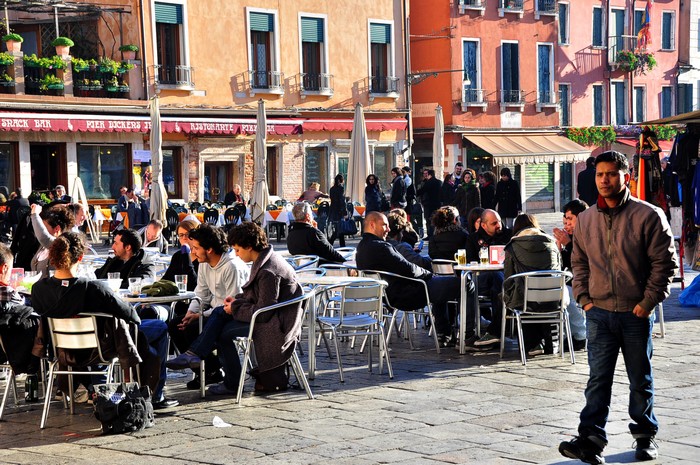
It was warm summer's evening in Venice. I was sitting outside Caffe Rosso in the Campo Santa Margharita, having the first of several spritzes before dinner. My husband and children were with me, and, somewhere at a nearby table, a chunky 30-something American bloke wearing a green CBGB T-shirt was braying rather loudly, regaling his listeners (a trio of young Belgians, as I recall....two men and a woman) with tales of his many marvelous experiences and achievements. He was too young to have hung out at CBGB when it was anything more than a tourist trap or a cheap T-shirt, but the Belgians didn't know that, so he could go on about how brilliant it all was back in 1976 (when he was five years old....) and he saw the Ramones and/or Patti Smith every night.

Meanwhile, I huffed and puffed and tsked with with irritation, annoying my family who felt that our night out was being hijacked not by a obnoxious loud mouthed American bloke, but by an obnoxious, complaining, intolerant (and loud mouthed) American woman--me.

We had dinner. The kids went back to our hotel. My husband and I returned to Campo Santa Margharita.

The chunky guy in the CBGB T-shirt was still there and so were the young Belgians. Within seconds, my ears became fixed (and fixated) on his even-louder intonations. I think by then he was bragging about his job (science lecturer at a state college). I bristled with irritation and so did my husband--not with Mr. CBGB, but with me!

The night wore on. The obnoxious Yank--all right, Yanks--got drunker. The Belgians did too. The men were slumped over in their chairs, the young woman looked wobbly and disoriented.


Although I had one ear tuned to the chunky Yank, my husband and I chatted away. Our conversation turned to something we didn't discuss much in those days--my writing. Jim mentioned a conversation he'd had with someone who'd said it was a "total shame" that I wasn't writing any more.

This was a well-intentioned, totally positive thing to say, right? Of course it was. There was no reason why such a comment should have made me so uncomfortable or aroused such intense and instantaneous hostility.

But it did.

And, seconds after Jim uttered the words "a total shame", the Yank at the other table began making disparaging, offensive, sexually explicit and LOUD comments about the young Belgian woman who'd just stumbled into the caffe. The words were extremely nasty, and I can only describe what happened next as an out-of-body experience.

Rage hurled me out of my chair, sent me weaving through the crowded seating area until I got to the Yank's table.

I don't remember what anyone did, or how anyone looked.  I remember nothing except for the words I shouted and how difficult it was keep my balance.

But anger trumped alcohol and I told the Yank that I was SICK to DEATH of having to listen to his ABUSIVE and INSULTING and OBSCENE language about some poor WOMAN, who wasn't even able to DEFEND herself,  so why didn't he do everyone in Venice a FAVOUR (only I was saying it in an American accent so I spelled it FAVOR) and just SHUT UP!

When I got back to our table, my husband's eyebrows were raised considerably. He may have said--he was certainly thinking--something along the lines of, "Well, I've seen you do some crazy shit over the years, Jane, but this..."

I ordered another spritz. Jim asked for "Il Conto." My fellow American went quiet. The Belgians staggered off into the night.

But "this" wasn't over.

Just as we were paying the cheque, the Yank came over to OUR table. Seemed he could do the whole "apoplectic with rage" thing, too.

He stood firm, scowled at me and said, "You picked the wrong town, man."

I pulled a face and said, "Huh?"

He said, "You heard me--you picked the wrong town."

"What are you talking about?"

"I know people in this town, man."

"You know people?"


"Yeah."

"Like, the mafia or something?"

He nodded. Glared.

"So you're, like, threatening me with the Venetian mob?" I sounded more and more like Joe Pesci with every word I spoke. "The one you hear so much about? The one in all the gangster movies?"

He glared some more. I scoffed.

"Maybe if we were in Palermo, I'd be scared," I said. "Maybe if we were in Napoli."

"Yeah, well you just watch your back," he said, before shuffling away...

That's it, people.

One crazy night is what made me want to write again. Some weird Venetian alchemy that I can't explain. A totally bizarre story that just had to be written down and told, over and over again.

At breakfast the next day, Jim jokingly warned the kids about "the price on Mum's head".

Afterwards I popped out to a little stationery shop and bought a lined notebook and shiny silver pen...

I started to write and haven't looked over my shoulder since.

Except when I'm in Venice, of course!


Friday, 22 March 2013

Why I Quit Writing--Part One

At some point every writer asks:  "I wonder if now is the time to quit?"

This might mean stopping work on a work in progress that has lost its way, or halting submissions to agents or publishers, or letting go of the notion that you actually have some talent and aren't merely an idle "scribbler." 


It might mean downing tools forever, and not writing another bloody word.

And, at some point, most writers' blogs will come up with a "when should you give up?" post. The answer that bloggers come up with is always "never". You must never, ever give up, despite the bitter disappointments and brutal rejections. Writing takes its own time, so be patient but persevere! 

That would also be my advice, except that, several years ago, I did quit. 

I quit totally.

I gave up completely.

I threw in the frickin' towel.  

Actually, describing my "hiatus" from writing as I've just done makes it seem far more conscious and noble act than it was. I made no public declarations or took no moral, fist-shaking, stand of defiance.

 In fact, I didn't actually quit, but simply ran out of energy, of ideas, of places to submit my work (I was then writing screenplays). In fact, what I really did was slink away, tail between my legs...

And it was the right thing to do! Despite some success, and plenty of "affirmation", writing was making me profoundly unhappy.

This unhappiness culminated in a disastrous residential course. It was a huge honour to have been selected by the tutors, who were (and are) internationally celebrated screenwriters. I got Arts Council funding for my fees and expenses, and couldn't have been happier or more excited about this wonderful opportunity.

Not real house...similar, though! 


I don't know why it all went wrong for me. I can only describe the experience, in an isolated house somewhere in Yorkshire, as being returned for a few days to a nightmare state of child-like anxiety and insecurity, of feeling foolish, awkward, incompetent, and of trying to remedy these feelings by doing and saying all the wrong things. I'm sure everyone else on the course had a great time, but for me? Even thinking about it, years later, it makes my stomach twist and my breathing get shallow...

So, quitting was easy. Writing brought misery, ridicule and shame. Real life, on the other hand, was full of lovely, happy family and friends, who didn't induce feelings of inadequacy, who weren't judging me on some spurious criteria that I couldn't completely understand, who thought I was funny and clever and talented without even trying!

There is no moral to this story, other than to savour and be grateful for the good, happy, constant things in our lives, for there are many, and they have nothing to do with writing. I'd also advise you to listen to your inner voice. My gut instinct, when arriving at the residential course, was to flee--I had a visceral sense of impending doom--and I should have paid attention to that feeling and not stayed on trying to "fix" the painful situation I was in.

Sometimes it's best to walk away, head held high...

And next week--what got me started again!


Monday, 18 March 2013

World Book Day 2013


I spent a brilliant World Book Day at Peacehaven Commmunity School in East Sussex, where I gave my first  author's talk (complete with jazz hands...)


Met some charming teachers, librarians and members of staff...


And, most importantly....


Got to work with some amazing students!


Thanks for your kindness, enthusiasm and good work, PCS! 


And once more with those jazz hands! 

Tuesday, 5 March 2013

Bravo for Booklinks! Hooray for Hackney!


I visited two very impressive schools in London yesterday, Our Lady's Convent School and the Clapton Girls' Academy, both in Hackney.  Thanks to Booklinks and the Pop-Up Festival for allowing me to take part. It was a pleasure to meet such enthusiastic and insightful students and to witness the work that dedicated teachers and librarians do in schools every day--not just during World Book Week!

What makes the Booklinks event extra-special special to writers as well as students, is that the students read a visiting writer's book and create their own work based on what they've read.


This experience--of talking to large groups of girls who'd actually read At Yellow Lake and had questions for me based on their reading experience--was so exciting! I feel like I learned as much, if not more, than the students--their brilliant responses and comments helped me focus on my writing in a way that I'd never done before. Working with real readers, especially readers as active and engaged as the ones I had the privilege to meet, is an experience every writer dreams of. I consider myself lucky to have had the chance!


Friday, 15 February 2013

A Tough Week to be Female

I'm not sure if what I'm going to write is really appropriate for my blog...it doesn't have an awful lot to do with writing, or children's literature. Well, maybe it does, I don't know.


But on the week that saw a hefty global turnout for One Billion Rising, recent news events, both in the UK and across the world, have highlighted how timely this event was, and demonstrated the importance of this organisation's efforts to end violence against women.

We've seen, in the past few months, horrific accounts of  fatal sexual assaults against two young women, one in Delhi, the other in a village near Cape Town. Here in the UK we've learned about the attacks on girls and young women by celebrities, as well as the grooming and abuse experienced by young music students. What is clear in these UK cases (the Saville attacks, and the abuse at the Chetham's School of Music) is that this abuse leaves emotional scars that last for decades. It's only as middle aged women that the victims felt strong enough to report what happened to them when they were younger.

Yesterday came the news that Reeva Steenkamp in South Africa was apparently shot dead by the athlete Oscar Pistorius. The mainstream media has focused almost exclusively on the alleged killer's "fall from grace" and shown pictures of his tearful court appearance, as if this tragedy was primarily about him, not the innocent victim. Tony Parsons, on Twitter, at least mentioned "the girl", and implied that it was a tragedy for Pistorius' many admirers as much as it was for her. Yeah. Poor "us."

And then, on ITV's This Morning programme, people were asked to consider whether women who got drunk or flirted "deserved to be attacked." The programme makers were rightly condemned for their ludicrous (and allegedly "controversial") question, but I find it amazing that allegedly intelligent people could think, let alone speak, such monstrous bullshit.

However, in incident after incident, crime after crime, there is an attempt to blame women for failing to live up to some standard that makes their attackers or killers less than totally culpable. I don't know whether or not Pistorius did, in fact, mistake Reeva Steenkamp for an intruder, but the initial reaction from mainstream and social media seemed to be a knee-jerk desire to make this tragic killing somehow justifiable. It's as if sportsmen were temporarily deemed incapable of harming or killing their partners. Seems like a weird amnesia, until you consider how many crimes committed by professional sportsmen are quickly glossed over and forgotten.

OK, so does any of this have to writing for young adults?

If we want to write truthfully about the lives of teenagers, we can't ignore the traumas they sometimes face, and sexual abuse and assault (as well as other types of "domestic" abuse) are very real, and far too prevalent. This doesn't mean that we have to write novels that deal explicitly with rape (though several YA contemporary novels do--Jenny Downham's "You Against Me"  is unflinching in its treatment of sexual assualt and of the effect that it has on two young couples and their families.) But I think that those of us who write for this age group need to be aware of both the prevalence of sexual assault and abuse within relationships, and the social stigma that keeps young women from seeking justice, or even help.

The statistics on abuse are mind-numbingly terrifying, and don't seem to be improving even though women's social status continues to rise. The NUS reports that 1 in 7 female university students in Britain have been the victim of sexual violence or assault, and in 60% of cases, the perpetrator was a fellow student. Only 4% of the victims reported the crime to their institutions; only 10% reported it to the police. Their reasons for not reporting are familiar--feelings of shame or embarrassment, and the fear that they would be blamed or held responsible.

Time and time again, young people feel they will not be listened to. Time and time again they fear being blamed for the crimes that have been committed against them. This happens now, and it happened years ago, as we've seen with the Saville and Cheltam's cases. And if we look at the NUS statistics, it's clear that many young men are still internalising this attitude. How many of  these male students considered themselves abusers?  Of course, most female students aren't abused, and the vast majority of male students (or men, for that matter!) aren't abusers, but attitudes seem frustratingly ingrained. It seems we just can't shake the old hypocrisies and double-standards.

Breaking down these psychological and social barriers to justice and sexual equality may not be the job of writers.  But it is our job to keep the tangled, troubling experiences of young people forefront in our mind. It's our job to tell the truth, and not be afraid to tackle subjects that some (OK, all) gatekeepers might (OK, will) squawk at.

Young people have a right to be heard--and believed. It's our job as writers to let them know that we're listening.

Symbol of the White Ribbon Campaign. An organisation  of men working to end violence towards women. 


Friday, 8 February 2013

National Libraries Day--Still More Than Just Books


Saturday, 8 February, National Libraries Day in the UK. This wonderful event was set up three years ago to highlight the threat of library closures across the country and to celebrate the amazing work that's done by Britain's trained and dedicated professional librarians.


Last year, I wrote the following post for National Libraries Day. One year on, libraries seem more precious than ever...  


For most of us, libraries are about books. About cultivating the love and joy of reading.

But libraries serve the public, and the public good, in other ways...


My husband grew up in West London. His family was not bookish (and neither was he, for the most part--playing football was his obsession). But he was an intelligent kid who had lost out in the 11+ selection lottery of those days and was sent by the local LEA to a less-than-inspiring or enabling Secondary Modern. 

However, Jim wanted to learn--even though the system had determined that he had no right to--and and he wanted to carry on with his education.

To do that he needed to find things out--information about colleges, about what exams he might need to get to university. His parents, though highly supportive, couldn't really offer him much help in this area and the system, as I said, had already written him off.

So where could he and his family go for guidance? There was no internet in the 1970s, so where could they find the information needed to improve Jim's chances in life?

In the library, of course--his very own search engine, as he once called it.   


The local library provided him with information. and with trained professionals who could help him find it. It  also became the safe, quiet space where, once he began his post-16 education, he could work and study. 


Jim ended up becoming a university lecturer. He's taught thousands of young people throughout his career, and probably values comprehensive education more than anyone I know. He had to fight for his chances-- they certainly weren't handed to him as a matter of course--and he hates to see anyone denied the opportunities he was finally able to take advantage of.  Don't talk to him about how great grammar schools were, OK?  Just don't...


Libraries have changed since those days, of course. But there are still plenty of Jims in the UK. There are still avid readers (more than ever, in these hard times) for whom books are not part of the standard household kit. There are still plenty of students who don't have access to the internet at home, or an adequate study area, or who need a quiet, safe, and free space to linger over an essay or just be alone for awhile. 


If we care about people, young, old or in-between, we must care about these valuable public spaces. Closing libraries--or limiting access hours or the numbers of trained librarians--limits opportunity, diminishes life chances and lessens social mobility.

Libraries are great equalisers, and they are there for us all, regardless of age or ability to pay. We lose more than just books if we let them disappear.