Friday, 30 August 2013

How to be a Writer

For some time, I've been thinking about doing a "writing tips" post. Sadly, I don't actually have any writing tips, other than "avoid adverbs," advice I've clearly failed to follow in this opening paragraph (count 'em!)

Oh, and some guy I met in a bar once told me never to use the word."that".

So that's the end of that...aargh!

However, although I don't feel confident sharing tips about the writing process itself, I do feel I know a little bit about being a writer.


So here are my "how to be a writer" tips:


1) Write. Thinking about being a writer won't make you one. Dreaming of being a writer won't make you one. Talking about being a writer (even when very drunk) won't make you one. Blogging or tweeting won't work either. Only writing will make you a writer.

2) Be patient. Be patient with yourself--you won't be a writer in a few months, or even a few years. And unless you are very, very very lucky, you'll need to be patient with the publishing process. It may take a long time to find an agent or a publisher for your work. In fact, every aspect of being a writer requires patience--from waiting for feedback, to getting a response to a query or submission. Even the time between signing a book deal and seeing your book in print takes ages. So whatever you're waiting for (and there's always something!) use your time well.

3) Persevere. I once read that patience is the active form of patience, and I like that definition. It means never stopping, never giving up, moving forward even though you have no idea if you will ever reach your destination..


4) Be nice to yourself. I was going to say "be confident" but that's not always possible. Most artistic types lack faith in their abilities. But you can be nice to yourself by taking your work seriously, and by fighting the urge to self-critique when that's really the job of others. I say this as someone who once almost talked an editor out of publishing one of my short stories (yes, it's true), and whose acting teacher once said, "Jane, instead of telling us how crap your scene is going to be, why don't you just do the scene and let us tell you how crap it was."

5) Be nice to others, especially other writers. To be a writer, you really do need the support of colleagues who are in the same game, regardless of where you or they are on the "writing journey." I've never met any writers who've been unkind or unsupportive to me, and I don't expect to meet any. But, just in case any of you are thinking about becoming a condescending jerk or an arrogant git, I must advise against it.


6) Grow a thick skin. One of the benefits of being a writer is that, unlike actors or other performers, you get to fail in the privacy of your own home. The sting of rejection is felt at home, too, and nobody has to hear your pathetic sobs other than family members or close friends.

 However, this doesn't change the fact that rejection hurts, and that other distressing setbacks and disappointments can (and will)  occur in the life of a writer. So, leather up your hide and/or buy some strong armour. You will need it.


7) Rejoice in the many positives, whether that's breaking out the bubbly after getting a book deal, or eating some delicious cake after reaching a word count. Taking pleasure at the success of other writers also helps, even if through gritted teeth!

8) Learn to smile and/or chuckle amiably when people say, "So, are you going to be the next JK Rowling?"  

And finally...

9) Never, ever ask another writer about their current work in progress. It will always be the same as what you're working on, only much, much better.


Tuesday, 6 August 2013

Summertime and the Reading is Easy

I'm not "on holiday" as I don't technically have a job...


I'm feeling none of that "school's out" euphoria and freedom that summer brings to teachers (and students). There's no "got to cram a year's worth of chores/partying/travel into two weeks" for lucky, lucky me. 

But still, getting to "the end" of my WIP in mid-July means that I've been feeling freer than usual, and the past few weeks of summer have felt like proper holiday time. 

As old habits die hard, I've done what I've always done during summer vacations--I've gone on a reading binge.

I'm still on one, in fact.

What have I been reading this summer? Let's start with the birthday presents--

May We Be Forgiven by A.M. Homes 


Bring up the Bodies by Hilary Mantel 


Then are there are the "beach reads":

The Angel's Game and Prisoner of Heaven  by Carlos Ruiz Safron (both re-reads, but as I was in and around Barcelona...) 

The Paris Wife by Pauline McLain

The Victoria Vanishes (Bryant and May investigate) by Christopher Fowler.

When will Bryant and May be a TV series?   

There have been some shorter books, squeezed into a day's reading

Mist in the Mirror by Susan Hill


Joyland by Stephen King


I hope I like the book as much as I do the cover! 


And on my TBR pile are This Book Will Save your Life (A.N. Homes again) and Where'd You Go, Bernadette?" by Maria Semple.

So, what do my choices say about me? 

1) I need a strong narrative.

2) I like genre fiction (historical, horror, ghost, mystery) but only when written by the very best. I struggle with thrillers, for example, because the writing is usually more Dan Brown than John LeCarre.  

3) I relish stories that have very specific locations (London for the Bryant and May series and the Mantel, Barcelona for the Ruiz Safron, though I wasn't at all convinced by the Europe of The Paris Wife.)

And finally...

4) There are no children's or YA books on my summer reading list...

Gulp. Sorry...

I've got a big YA TBR pile, so I can only conclude that as writing for young people is my "work", reading YA in the summer holidays feels a bit like work, too. 

As much as I love reading YA or middle grade, I don't seem to be able to lose myself as easily or completely as I do with an "adult" book. I tend to read more consciously, analysing structure and pace and language and dialogue--there is so much to learn from other writers! 

Of course, I'm learning from Hilary Mantel and Christopher Fowler, too, but it's a more immersive (if that's a word) and less conscious educational experience. But who knows, one day I may want to write a charming, exciting and literate mystery of my own, or even challenge the greatest historical (or any) novelist of her (or any) time...

But for now, I'll let them do the writing while I take it easy and have all the fun.


Happy reading everyone! 


Wednesday, 10 July 2013

Publication--One Year Later

My debut novel At Yellow Lake was published in the UK just over a year ago.

And what a year it has been--magnificent launch party, school and festival events, a nomination for the Carnegie Medal as well Waterstones Prize and Branford Boase longlistings--heady stuff! In many ways, my life has changed immeasurably. I'm proud of At Yellow Lake's reception into the world, and will never forget this wonderful "debut" year!

Let's have yet another look at that amazing US launch cake...

The memory of this (and other) launch cakes has seen me through my darkest moments...


Of course, there have been a few disappointments, too.

As most people who follow children's publishing in the UK know, my publisher, Frances Lincoln, was taken over by another company and their children's fiction list pulled. I've blogged about this before, as have others who were affected--many of them more adversely than me--by this decision. This meant that the book I'd hoped would be my follow-up to At Yellow Lake wasn't going to be published by Frances Lincoln.

Nor by anyone else, as it turned out...

Bryony Pearce in the SCBWI Words and Pictures magazine wrote about her own post-debut disappointments. Happily, she has just published her second novel with a new publisher, and I'm sure it will be a great success--and worth waiting for!

But, as she points out in that honest and insighful post, it's pretty disheartening when things don't quite go to plan. When the natural follow-on to publication--further publication--doesn't happen straight away, or even at all, it's demoralising to say the least. If you suffer from nagging self-doubt, and want to boost your levels up to "crippling", this is a good way to do it.

But still....this is the way it is. Even if you're published, disappointments can (OK, will, eventually) occur.

Maybe you're published by a major publisher but aren't "lead title". Your book may not get the attention you know it deserves. Your sales may suffer. You may feel like a bridesmaid, instead of a bride--and at your own wedding! Or, maybe your sales have slipped and you've had the last two books of a series contract pulled. Or, maybe you finished the books in your contract, and no others are asked for.

Maybe, maybe...

I had a wonderful lunch with some of my fellow 2010 Undiscovered Voices in London last month.  Between jokes and stories and opinions (not to mention mouthfuls of delicious foods and the occasion glug of wine) we talked about these things. The near-miss at acquisitions, the lost agent, the fear of being published only once (or never at all), the gnawing insecurities we all feel and all face as writers.

In the end, there are no guarantees. Some of us may never get published or signed with an agent. Some of us may be one hit wonders (although "hit" would probably closer to the mark in my case!)

Again, this is part of the game, par for the course. In a creative industry where the sellers vastly outnumber the buyers, this will always be the case, and even moreso in today's turbulent climate.  

So, what advice can I give based on my debut year experience?

1) Relish the good stuff! Celebrate and enjoy any success that comes your way, and never take it for granted.

2) Be thankful for the support of family and friends as well as writing and publishing colleagues. Meeting new people and making new friends has been one of the best things to come out of my writing and publishing experience.

3) Be appreciative of those who champion your book, whether they are events organisers, school librarians, book shop owners, or your (many, I hope) readers. We owe these people so much!

4) In the end, it's the work, the writing itself, that is the best, most lasting and most important thing, so never give in to the disappointments and fear.


Monday, 20 May 2013

The Writer's Waiting Game


Look at Facebook. Tweet.

Check e-mails....again.

Pay attention to neglected children/partner/job/friends.

Then sigh, pace, flip through the diary pages--how many days has it been now?

And do it all again.

I think it was Alan Bennett who said, "Writing is mostly making cups of tea."

But there are two types of tea drinking for writers. There's the "creative", mulling things over, taking a break from the desk or paper or screen, the stretching and yawning reward cup of tea.


Then there's the "waiting" cup of  tea. Altogether different. This stewed and bitter brew is just a time-killing cup of tea, and it doesn't taste nearly as delicious.


The waiting that I'm talking about is, of course, is that killer time that happens after a work in progress is nominally "finished."  It's waiting to get feedback from your critique group or hear from an agent, publisher or a competition judge. Ultimately, it's waiting for judgement--rejection or acceptance, yes or no.


When you're waiting to get a response from a query, or even to hear back from the wonderful agent you feel so lucky to have, time does strange things. Think back to being a child, and having to wait for your birthday, or the start of the summer holidays, or Christmas.

In Minnesota, where I grew up, my community followed the Nordic custom of opening presents on Christmas Eve. This made for some lovely memories--a roaring fire, Christmas tree lights twinkling in the darkness and, outside the window, starry skies and clean white snow.


But it also made for a long, excruciating, almost unbearable wait till the evening. My parents had plenty of suggestions for passing the time--go play in the snow, take a nap, help out in the kitchen (as if!). Nothing worked. Timed just dragged.


So now, years later, I try the same thing, looking for similar ideas that will distract me during the weeks of waiting to hear back from my agent or get news from a publisher. Playing in the snow? Well, maybe I'll go on a series of long walks, or even a short holiday. Taking a nap? OK, I'll try reading. Help out in the kitchen? God knows those cupboards could use a good clean...

What else helps?

Starting a new piece of writing, obviously, but I'm still rather attached to the piece I've just finished, so instead of starting something new, I go back to my manuscript and do what I call "scab-picking." You know--tweaks and tiny changes that are pointless at best, damaging at worst.

Blogging does--I've made this post "last" by writing two words a day, clever me!

But generally, there's nothing to be done but carry on with life, and with writing.

And tweet, of course.

And check that inbox one more time....

while drinking a cup of tea.


Tuesday, 7 May 2013

A Writer's Voice

Last week, after a lovely night out, my daughter and I came upon a busker in Brighton's Lanes. It was quite late, very cold, and a young man was sitting on a pile of blankets, bundled up in a heavy coat. He was also playing a guitar and singing an old Van Morrison song, "Crazy Love."


He had a wonderful voice--the kind that forces you to stop and listen, no matter how cold it is or how tired you are, and stay until the end of the song, even if it means missing the last bus. There was no other audience for him--the Lanes were empty--so I did what seemed appropriate at the time. While my daughter dropped a few pounds into his guitar case, I dropped in some harmonies.

Yes, I'm a sometimes singer, and the writing "break" I blogged about a few months ago happily re-kindled my desire to sing and perform. Once I started writing again, I stopped, though--seems I can only exercise one type of "voice" at a time.

Well, the late night, back alley singing felt good. I think it probably sounded OK, too, but mostly it felt good (at least to me!).

Re-wind to a few weeks earlier, when I was at the launch for SCBWI's  Undiscovered Voices 2014. It was a great chance to meet up with fellow UV winners, all of whom are now friends, and to meet other writers and illustrators, who hope to be chosen for the next edition of Undiscovered Voices.

The selection panels were there, too--editors and agents (including my wonderful agent, Sallyanne Sweeney) giving helpful information about what makes a good book, and what they hoped to find in a writer's (or illustrator's) work.

For the writing panel, it all came down to one word--voice.

They talked about other things--personal preferences in genre, types of books they didn't particularly want to read--but really, the only thing that truly mattered to them was voice.


As writers, we hear this time and time again. But what is a writer's "voice"?  How do you know if you have one? If you don't have one, what can you do?

At the launch, several suggestions were made--you can read them on SCBWI's Words and Pictures Online Magazine (and get information about SCBWI and UV2014--the competition opens 15 July!)

For me, my writer's voice comes from the same place that my singing voice does--the inside. Harmonising with the guy in the Lanes reminded me of how singing "feels", as much as how it sounds. It reminded me where my brain has to go, what my body has to do, and helped me remember the magical, strangely intimate thing that happens when two or more voices "connect".

Singing requires a kind of suspension of self, where your body and the words and the music create something that comes from you, but isn't you...yet is.

I think the writer's voice is similar. There's a stillness that has to occur, a concentration, an internalisation, a connection to be made if the voice is to resonate.

But who or what is a writer connecting to? The imagined reader? An editor?

The first connection I usually make is to character (although "character" could mean story, or genre, or setting, I suppose...) Writing feels to me like putting on a new skin, and working from the inside out, in the way that singing is also putting on the "skin" of both songwriter and the interpretative you-that-is-not-you. It's also like the way an actor "gets into character". For a YA or children's writer, this means channeling, usually, a child or teenager's point of view. And here, the actor analogy comes into play even further. To create a role, an actor has to examine herself--often going into deep memory--but must also be a keen observer of  the world around her, taking note of how real people talk, walk, think. To have a voice that is true, a children's writer should have a long memory, not just for incidents or experiences or details, but for emotional situations that were awkward or painful or funny or terrifying.

Like other artists, writers have to use their own lives and experiences, but then shake off the the shackles and limitations of self so that something else can play out on the page. This "something else" doesn't happen all the time--it takes hard work, perseverance  plenty of practice. But to me, this is the "connection" that makes characters and stories seem true and alive, and makes the elusive writer's "voice" take off and sing.


Tuesday, 23 April 2013

Why I Keep Writing

I was going to title this post "Why I Write" but there are already major league essays by premiership-calibre writers called "Why I Write" so I changed my mind.

"Why I Write" sounds like a piece by a writer who has a grand vision or "mission statement" rather than somebody like me, who is pretty much meandering along the road, stopping off in places that look interesting, taking a break when needed, or scrabbling, when necessary, over tough terrain.


So here are the reasons why I keep writing, in no particular order.

1) If I didn't write, I'd have to something else, like clean the house, or cook, or weed the garden. You want a great excuse for being a total slob? Become a writer.


2) If I didn't write, I'd never have the chance to eat book launch cake, or drink book launch wine. Please note that not everyone has a book launch, and that non-writers can also go to book launches, but by becoming a writer you will increase your chances of attending (if not hosting) an event where these lovely treats are served.


3) If I didn't write, there's virtually no chance that I'd be able to go back to the writers' yurt at the Edinburgh Book Festival (and use the writers' toilet) without donning a Carol Ann Duffy, Ian Rankin or Teri Terry disguise.

4) If I didn't write I'd have to grow up properly. I wouldn't be able to temporarily channel the mind and body of a child or teenager (OK, I could try, but frankly, I'm no Grayson Perry.) I'd just be middle-aged --boring!

5) If I didn't write, I'd have to change out of my writer's uniform.


6) If I didn't write, I could never reveal to the world the glimmering insights buried deep within my sensitive poet soul...HA! Almost fooled you, didn't I?

So, seriously, why do I keep writing?

I'm not sure. I love stories--I love hearing them, reading them, watching them, making them. I love the way writing takes me to so many places and allows me to be so many people. I love the fun of writing--the "where will this take?" me development of a story or "who the hell this?" emergence of a character. I love the wonderful people I've met since devoting serious time to writing. And these "loves" far outweigh the frustrations and heartbreaks of writing--the rejections, the disappointments, the sheer hard slog, the anxiety, the self- doubt.

But the most important thing?

I really, really want to use the Edinburgh authors' toilet again...


Wednesday, 3 April 2013

Why I Quit Writing--Part Two

Last week I wrote about the unhappiness and frustration that caused me to take a writing break that lasted  over five years. It was a difficult post to write, as it dredged up painful memories and rekindled a still-palpable sense of embarrassment and failure. Many lovely readers made kind and thoughtful comments, and I promised that I'd follow up with an account of what brought back my desire to write.


I hope that what follows doesn't disappoint you too much. There are no words of wisdom, no real insights, there is no glorious epiphany....

The story, however, is completely true...

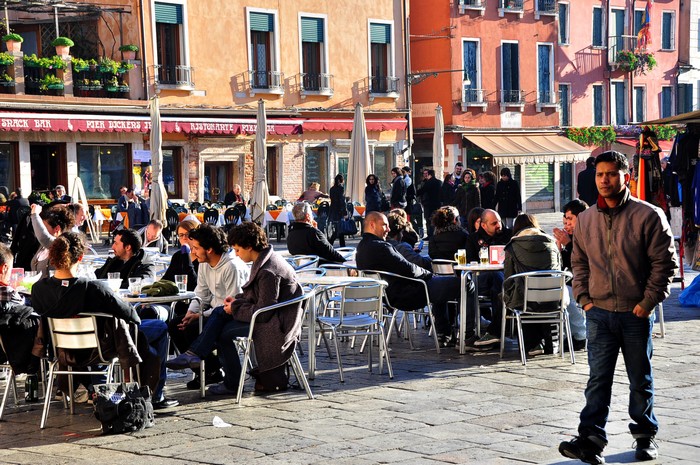
It was warm summer's evening in Venice. I was sitting outside Caffe Rosso in the Campo Santa Margharita, having the first of several spritzes before dinner. My husband and children were with me, and, somewhere at a nearby table, a chunky 30-something American bloke wearing a green CBGB T-shirt was braying rather loudly, regaling his listeners (a trio of young Belgians, as I recall....two men and a woman) with tales of his many marvelous experiences and achievements. He was too young to have hung out at CBGB when it was anything more than a tourist trap or a cheap T-shirt, but the Belgians didn't know that, so he could go on about how brilliant it all was back in 1976 (when he was five years old....) and he saw the Ramones and/or Patti Smith every night.

Meanwhile, I huffed and puffed and tsked with with irritation, annoying my family who felt that our night out was being hijacked not by a obnoxious loud mouthed American bloke, but by an obnoxious, complaining, intolerant (and loud mouthed) American woman--me.

We had dinner. The kids went back to our hotel. My husband and I returned to Campo Santa Margharita.

The chunky guy in the CBGB T-shirt was still there and so were the young Belgians. Within seconds, my ears became fixed (and fixated) on his even-louder intonations. I think by then he was bragging about his job (science lecturer at a state college). I bristled with irritation and so did my husband--not with Mr. CBGB, but with me!

The night wore on. The obnoxious Yank--all right, Yanks--got drunker. The Belgians did too. The men were slumped over in their chairs, the young woman looked wobbly and disoriented.


Although I had one ear tuned to the chunky Yank, my husband and I chatted away. Our conversation turned to something we didn't discuss much in those days--my writing. Jim mentioned a conversation he'd had with someone who'd said it was a "total shame" that I wasn't writing any more.

This was a well-intentioned, totally positive thing to say, right? Of course it was. There was no reason why such a comment should have made me so uncomfortable or aroused such intense and instantaneous hostility.

But it did.

And, seconds after Jim uttered the words "a total shame", the Yank at the other table began making disparaging, offensive, sexually explicit and LOUD comments about the young Belgian woman who'd just stumbled into the caffe. The words were extremely nasty, and I can only describe what happened next as an out-of-body experience.

Rage hurled me out of my chair, sent me weaving through the crowded seating area until I got to the Yank's table.

I don't remember what anyone did, or how anyone looked.  I remember nothing except for the words I shouted and how difficult it was keep my balance.

But anger trumped alcohol and I told the Yank that I was SICK to DEATH of having to listen to his ABUSIVE and INSULTING and OBSCENE language about some poor WOMAN, who wasn't even able to DEFEND herself,  so why didn't he do everyone in Venice a FAVOUR (only I was saying it in an American accent so I spelled it FAVOR) and just SHUT UP!

When I got back to our table, my husband's eyebrows were raised considerably. He may have said--he was certainly thinking--something along the lines of, "Well, I've seen you do some crazy shit over the years, Jane, but this..."

I ordered another spritz. Jim asked for "Il Conto." My fellow American went quiet. The Belgians staggered off into the night.

But "this" wasn't over.

Just as we were paying the cheque, the Yank came over to OUR table. Seemed he could do the whole "apoplectic with rage" thing, too.

He stood firm, scowled at me and said, "You picked the wrong town, man."

I pulled a face and said, "Huh?"

He said, "You heard me--you picked the wrong town."

"What are you talking about?"

"I know people in this town, man."

"You know people?"


"Yeah."

"Like, the mafia or something?"

He nodded. Glared.

"So you're, like, threatening me with the Venetian mob?" I sounded more and more like Joe Pesci with every word I spoke. "The one you hear so much about? The one in all the gangster movies?"

He glared some more. I scoffed.

"Maybe if we were in Palermo, I'd be scared," I said. "Maybe if we were in Napoli."

"Yeah, well you just watch your back," he said, before shuffling away...

That's it, people.

One crazy night is what made me want to write again. Some weird Venetian alchemy that I can't explain. A totally bizarre story that just had to be written down and told, over and over again.

At breakfast the next day, Jim jokingly warned the kids about "the price on Mum's head".

Afterwards I popped out to a little stationery shop and bought a lined notebook and shiny silver pen...

I started to write and haven't looked over my shoulder since.

Except when I'm in Venice, of course!